I.
Back then, you knew pretty little about it. You were in clothes that tightened at the wrong seams around your stiff legs. At that point, I was already years ahead, more limber and light-footed. But you came along anyway. The room was vast and hurt your eyes. They kept the lights hot, burning pink on the walls and floor. It felt dizzying, and it does even now, when you and I remember it — so much of what we did then was staring into incandescent lamps.
You were taught you were not one of us. We stayed in a manor, kept clean on a hilltop. You, instead, stayed in mildewed rooms with strangers. They crawled onto the roofs, drank from bottles, stole away into the night. They sometimes stumbled. It was embarrassing to see one of your roommates, back broken, being carted from room to room. You felt you owed us an explanation for his poor behavior.
We can all watch YouTube together, though. We can watch her legs and his jump and their chemistry and his feet and her feet and his turns and her feet. You are watching the videos and our reaction to the videos — it’s important to rehearse the way that we react to the videos. If you cannot dance right, at least you can watch perfectly. You can watch the dancing the right way, and we will show you how.
Here’s a favorite:
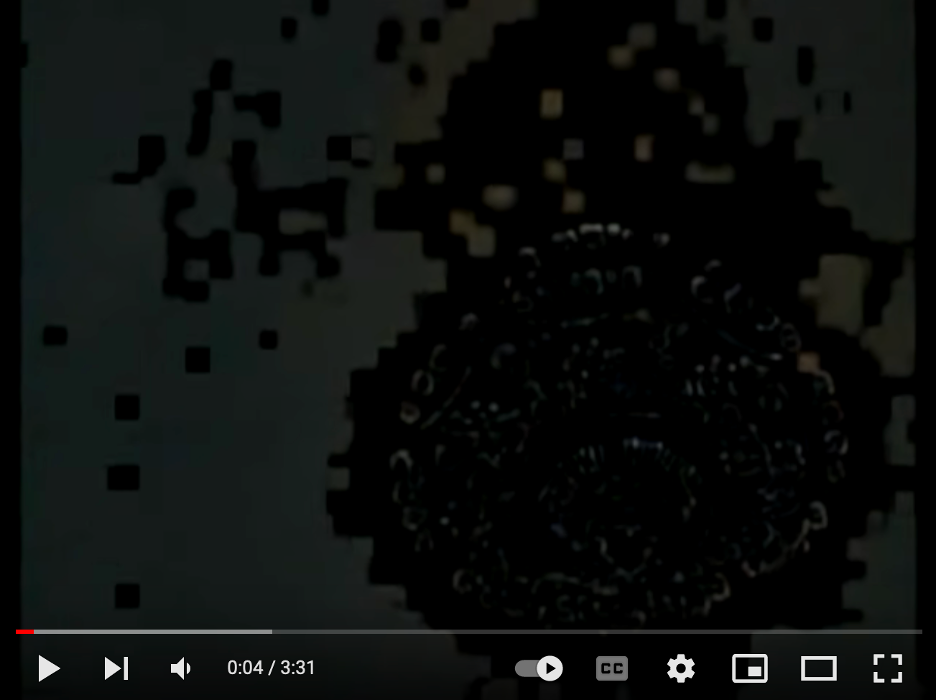
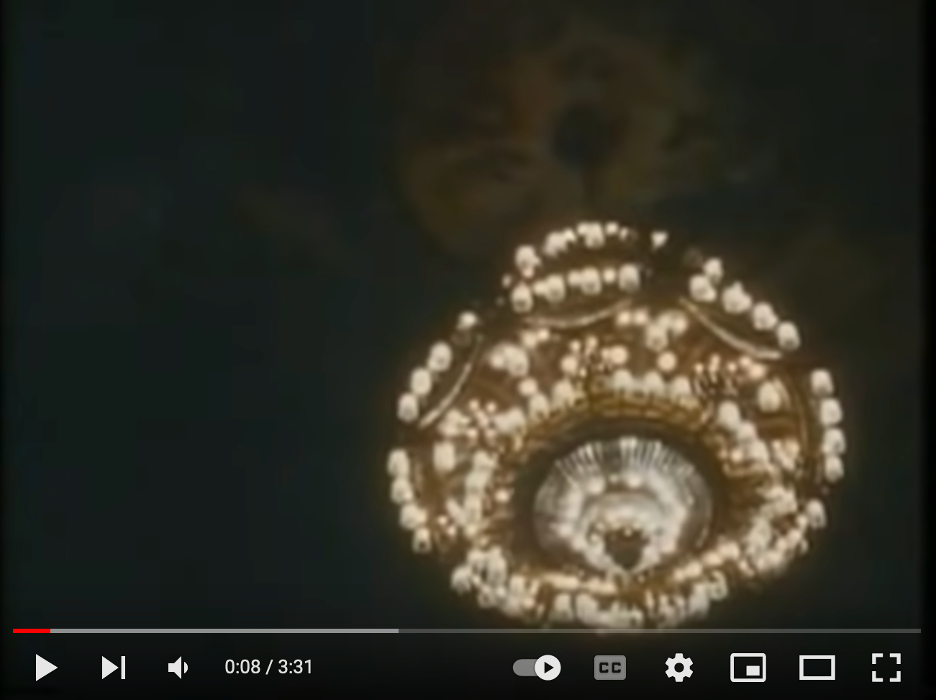
The camera focuses on a chandelier. It lingers for some time before the screen seems capable of registering light. Instead, for those few seconds, we all see something more interesting. The video cannot capture the object and summons a dark, black shape. The black hovers over the chandelier like a phantom, clinging to the bulbs and glass. It’s a shield, protecting us from how shockingly ghost-like the dancer will look when she finally walks onstage. At last, she glows, a white figure in a dark chamber.
You get the idea: it’s an old video, archival footage, and the static comes with the territory.
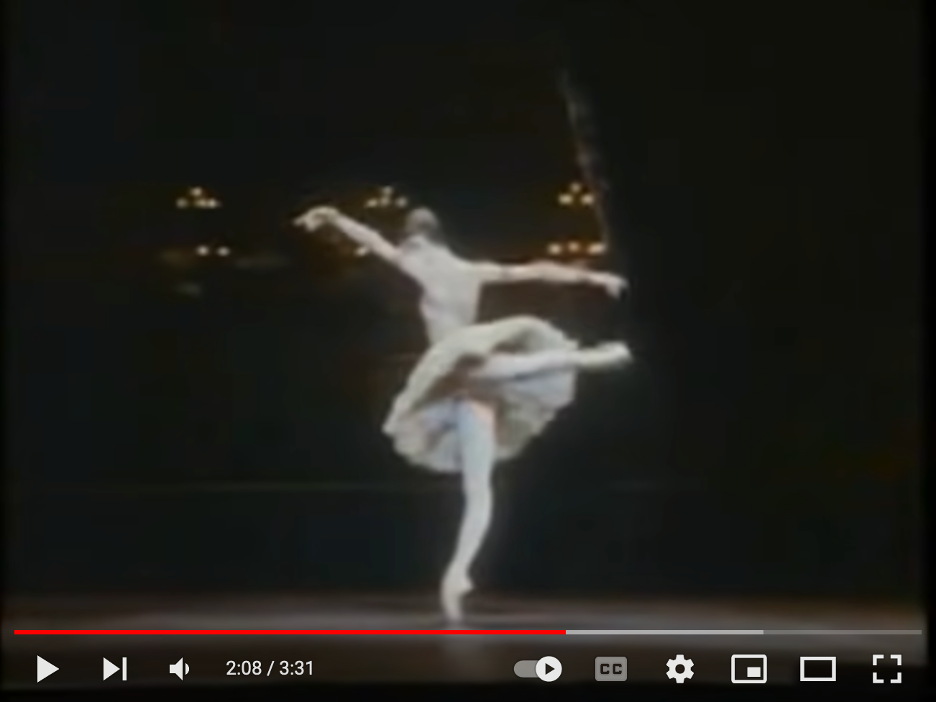
It is hard for you to recount what made the entire thing so appealing, where the excitement sprang from. It feels like a relief to look back on it with softened, dull eyes. But if you really think, if you linger and wait for the black to resolve into something else, you can see a vision of what came before. It was the possibility of proximity, of sitting near the elect.
It is the amplitude that flies off an outstretched leg in motion. It is the trace of a body soaked in stage light. The static describes the weight of emotion when there is nothing else to see. It attains a familiarity. Now, even when you’re certain you’ve forgotten it, the distortion lingers.
II.
French ballet dancer Sylvie Guillem is playing with a dog before the camera cuts to her performance in William Forsythe’s In the Middle, Somewhat Elevated (1987). Guillem swats the dog, it barks, and the whole screen glitches out; you can barely see her. Back then, there were precious few videos of great dancers online. The videos’ age is betrayed by their poor quality—but, for us, that never spoiled the lot.
Played at full speed, the dancing in Middle looks virtuosic. Paused or slowed, the pixels look like something else. The glitches are not unpredictable; they repeat over and over. The mistakes get rehearsed.
Art historian, critic, and ballet fan Douglas Crimp once confessed that his copy of Derrida’s Of Grammatology is inscribed with the seat numbers for his preferred tickets for New York City Ballet: in the Fourth Ring and far back from the stage at Lincoln Center. With the distance permitted by his choice of seat, Crimp wondered what would happen if we consider the frame as an essential, non-separable part of the work of art. This obliquity, Crimp believed, is what allowed us to reframe Balanchine, to release him from the neoclassical purity that cordoned him off from our other interests at the time, like postmodern theory.

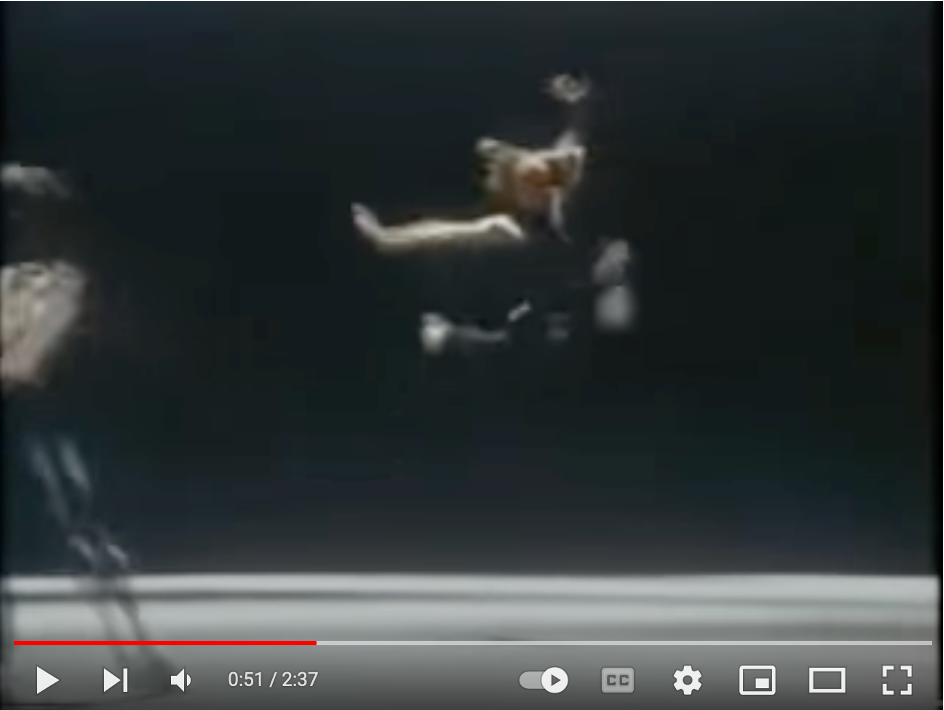
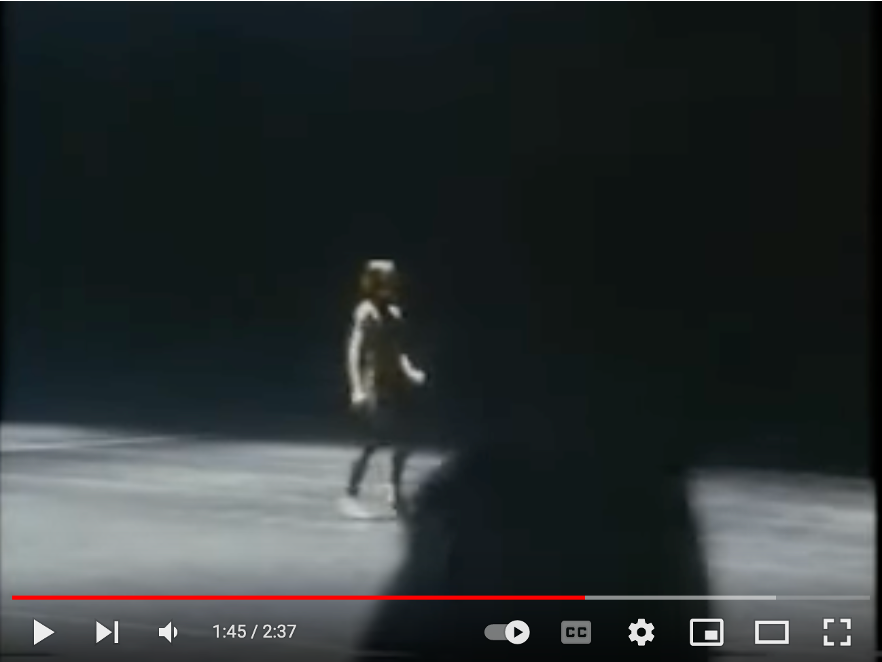
What Crimp saw at Lincoln Center, we see on YouTube. This is a frame, too: the timestamp and play and pause and comments and theater view options, to stretch the pixels as far as my laptop will allow.
You’ve always tried to ignore the pixelation, but we wonder whether it’s integral to the movement. For communications scholar Carolyn Kane, a glitch is a nice way to “screw-up.” The word derives from the German glitschen meaning to slip, the Old High German gliten, meaning to glide, and the Yiddish glitshen, meaning to slip or skid of course. These words all sound with more bite than a glissade. It’s a glide, a transition or preparation step in ballet that a viewer usually doesn’t pay much attention to. Ballet trains us to push glitches off-screen. A glitch, being an error, should lack significance.
But what gets left on YouTube is really material. Caught online, it’s like the frame is fraying. The video is aged and aging, deteriorating, worse for wear. The dance is getting old, too. Filmmaker and artist Hito Steyerl offers a sympathetic reading of “poor” images, of the low-res and glitched and hard-to-see:
Altogether, poor images present a snapshot of the affective condition of the crowd … The condition of the images speaks not only of countless transfers and reformattings, but also of the countless people who cared enough about them to convert them over and over again, to add subtitles, re-edit, or upload them.
These videos, then, are well-worn, with attention, concern, and love.
Back to watching Middle. When Sylvie finishes her solo, a figure walks through the wings, passing between the camera and the stage. She momentarily slides out of view, and we think back on the chandelier. But we want to pretend that the glitch covering the chandelier isn’t a wall or an obstruction (like Sylvie’s fellow dancer). We want the screen’s blackness to become an opening.
An opening to what?
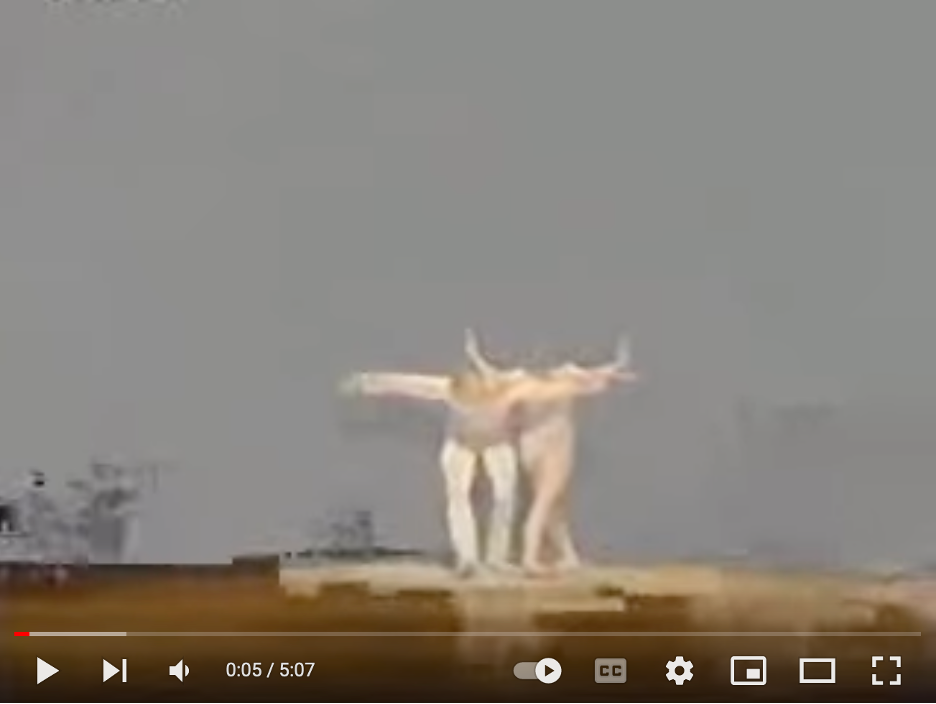
These glitches, read differently, can point to meanings pushed behind. We read somewhere, once, that Niels Lanz created the score for David Dawson’s THE GREY AREA (2002) by slowing down a classical piece of music to the point where its melody is unrecognizable. But the videos hold your interest. In a YouTube recording of the final GREY AREA pas de deux, Sofiane Sylve makes her appearance walking backwards, draped over her partner’s outstretched arm. The screen glitches and gets covered in gray—the video fails. Or maybe the technology that converted the video to digital knows something we don’t.
Sometimes, failure has a function in dance. Training to failure: In weight training, training to failure is repeating an exercise to the point of muscular failure. You recall Sofiane lamenting that she could no longer feel her feet halfway through a ballet’s run. On Instagram, you saw a dancer ask whether European choreographers take bigger risks because of broader access to health care, relative to the United States. Injuries become glitches for many dancers, something peripheral that gets ignored (until it’s too late, until failure).
The erroneous is better forgotten. The dancing is what matters most. But we think the glitches should matter more. The static territory, the rehearsed mistakes, the blackness behind the luminaries: these are the moments that deserve our interest, not our criticism. Turning to this obliquity would probably require us to leave Balanchine (and Forsythe, and Dawson) behind, altogether. But here’s one more choreographer we watched together:
III.
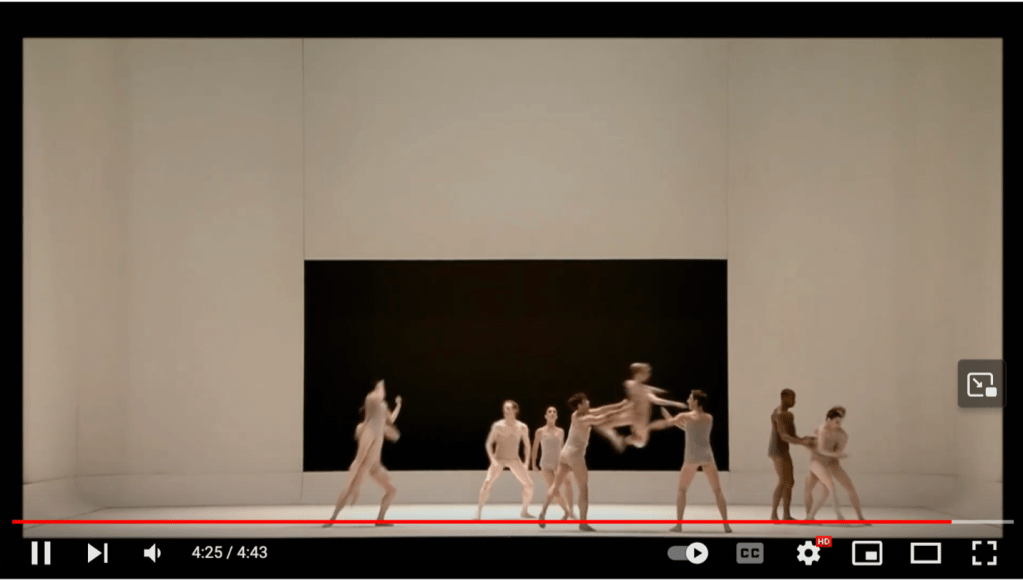
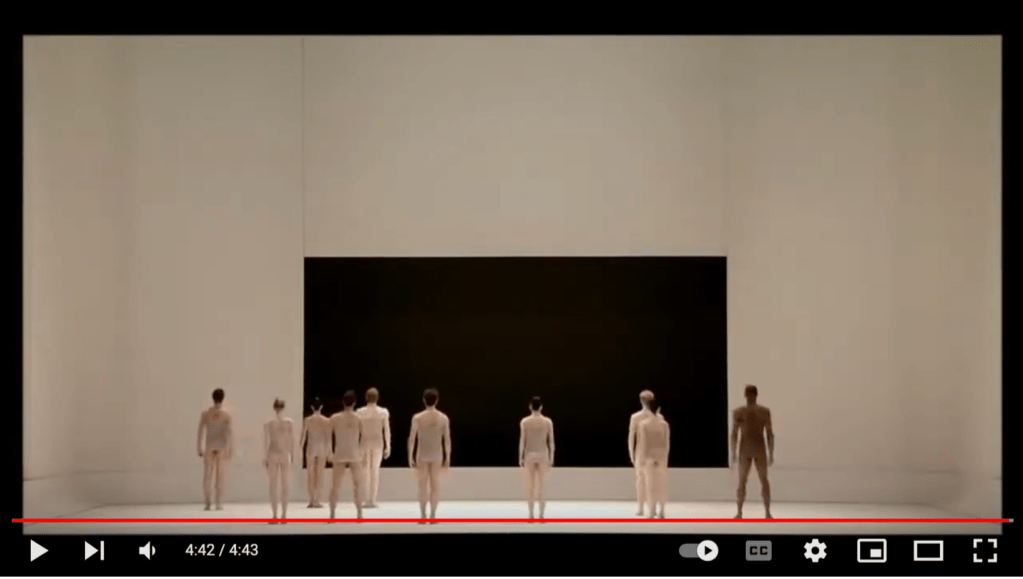
Wayne McGregor choreographed Chroma in 2006. The ballet is primarily set to a range of music, including orchestral arrangements of songs by the White Stripes’s Jack White. Physical, gymnastic movement predominates. For the piece, the stage becomes a “box.” There are no wings; the dancers must enter from openings between the walls and the proscenium downstage or through an opening cut through the center of the set. The opening, which you might call a screen, is lit to change hue throughout the course of the ballet. Sometimes it falls dark, sometimes it glows white.
The dancers in Chroma glitch out. There are spasms and twists and jumps that distort the classical movement vocabulary. The dancers’ presence so severe as to appear militant. But their dancing manages to remain flamboyant and sensual.
Premiering not long after the launch of YouTube, Chroma appears to thematize ballet’s nascent and future onscreen-ness. (I wonder how many times McGregor has watched Guillem on YouTube.) Even in 2024, it looks cinematic, repetitive, bold. The dancers move in and out of and off screen, coming onstage after watching each other. I don’t think that Chroma is saying everything we’ve said here, but the ballet is almost online—here is a performance conscious of the archive.
This is underscored by the ballet’s quick conclusion. After the dancers spin and jostle and throw each other around, they quickly untangle to face upstage.
McGregor’s clever finish turns the dancers away from the audience. But are they turned away from us? Maybe they are turned towards the screen. They are watching, waiting for the next move.
Who among us makes the first mistake?
Teddy Watler is from Long Beach, California.

